
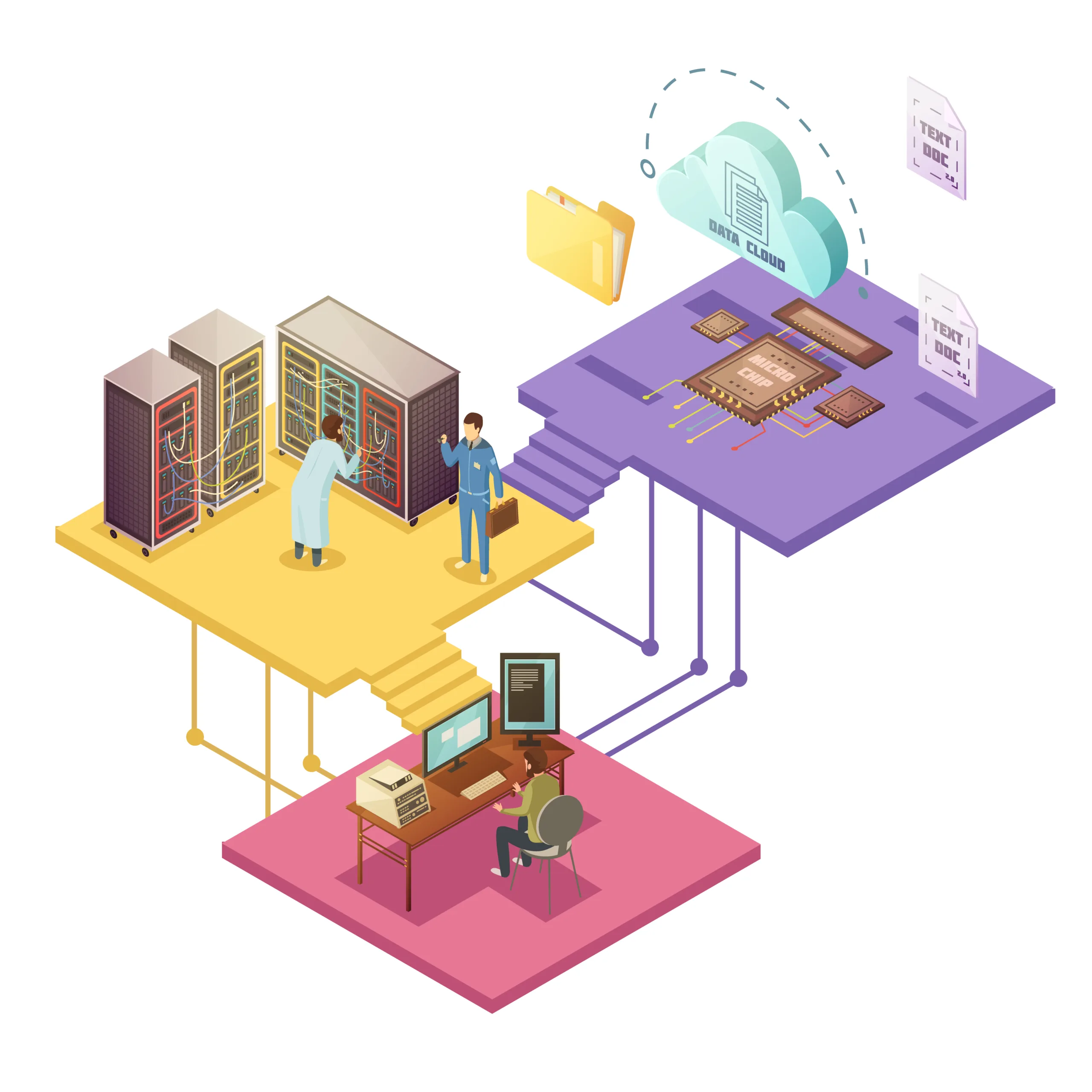
For many businesses, the future isn’t fully cloud-based — and it isn’t purely on-prem either. Instead, it’s hybrid. Some systems live in the cloud for flexibility, while others stay on-site for performance, legacy, or compliance reasons.
This approach offers the best of both worlds, but it also introduces new challenges. Without a clear plan, hybrid IT environments can become fragmented, inconsistent, and harder to secure.
A successful hybrid IT strategy isn’t about choosing sides. It’s about making cloud and on-prem systems work together securely, reliably, and efficiently.
Why Businesses Choose Hybrid IT
Hybrid environments don’t happen by accident. They usually emerge because they solve real business problems.
Common reasons include:
- Legacy applications that can’t easily move to the cloud
- Data residency or compliance requirements
- Performance-sensitive workloads
- Gradual cloud adoption rather than a “big bang” migration
For many UK SMEs, hybrid IT provides flexibility without forcing disruptive changes. However, that flexibility only works when it’s managed properly.
The Security Challenges of Hybrid Environments
Hybrid IT expands your attack surface. Data flows between cloud services, on-prem servers, and user devices — often across multiple locations.
Common risks include:
- Inconsistent access controls
- Shadow IT cloud services
- Poor visibility across environments
- Gaps between on-prem and cloud security policies
Attackers don’t care where systems live. They look for the weakest link, and in hybrid setups, that’s often the point where environments connect.
💡 If your systems span cloud and on-prem, our Cybersecurity services can help close security gaps between environments.
Step 1: Centralise Identity and Access
Identity should be your security foundation. Instead of managing separate logins for cloud and on-prem systems, use a single identity platform wherever possible.
Tools like Microsoft Entra ID allow you to:
- Apply consistent access policies across all systems
- Enforce MFA centrally
- Remove access instantly when staff leave
Centralised identity reduces complexity and makes security far easier to manage.
Step 2: Apply Zero Trust Consistently
Hybrid IT environments benefit hugely from a Zero Trust approach.
Rather than assuming internal systems are safe, Zero Trust verifies every access request — regardless of location. Conditional access rules can check:
- User identity
- Device health
- Location and risk signals
This prevents compromised credentials from granting unrestricted access across your environment.
Step 3: Secure Network Connectivity
Hybrid networks rely on secure connections between on-prem systems and cloud services. These links must be protected just as carefully as internal networks.
Best practices include:
- Encrypted VPNs or private connectivity
- Strict firewall rules between environments
- Network segmentation to limit lateral movement
Poorly secured connections can undo even the best identity controls.
Step 4: Improve Visibility and Monitoring
Security teams need visibility across both environments. If cloud and on-prem monitoring tools operate in isolation, threats can slip through unnoticed.
Unified monitoring helps you:
- Detect suspicious behaviour early
- Correlate events across systems
- Respond faster to incidents
Log aggregation and central dashboards are key to maintaining situational awareness.
Step 5: Plan for Resilience and Recovery
Hybrid strategies should always include backup and disaster recovery planning.
Ask key questions:
- Where are backups stored?
- Can cloud backups restore on-prem systems (and vice versa)?
- How quickly can systems be recovered after an incident?
Testing recovery processes regularly ensures your hybrid setup can withstand outages, ransomware, or accidental data loss.
Hybrid IT Done Right
Hybrid IT doesn’t have to be complicated or risky. With clear identity management, consistent security policies, strong connectivity, and unified monitoring, businesses can enjoy flexibility without sacrificing protection.
The goal isn’t to eliminate on-prem systems or rush everything into the cloud. It’s to create a cohesive, secure environment that supports how your business actually operates.
👉 Need help building a secure hybrid IT strategy? Our Managed IT Services can design and manage an approach that fits your business today — and tomorrow.
Article used with permission from The Technology Press.
Comments are closed