
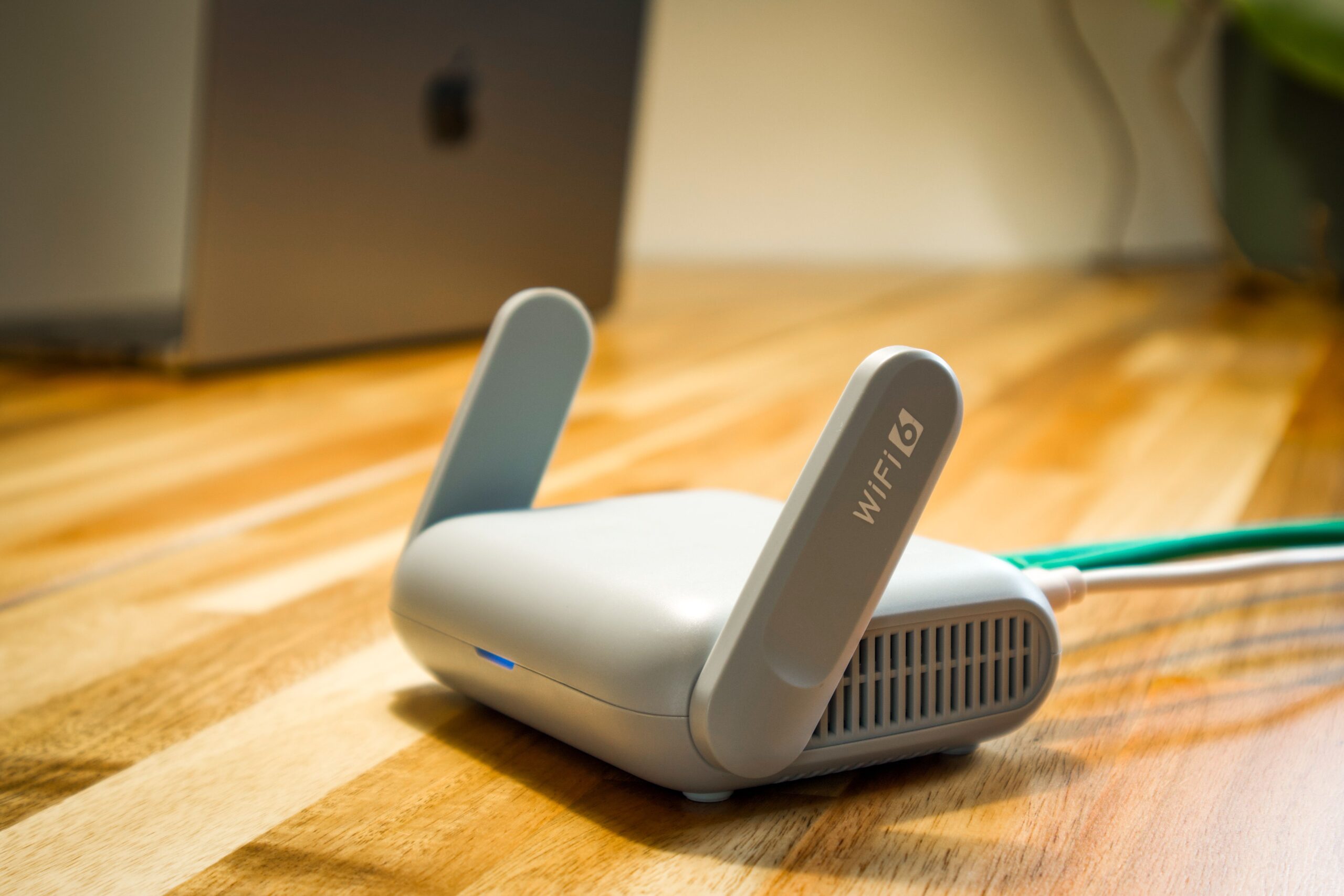
Guest Wi-Fi should give visitors internet access without letting their devices connect to your business systems. Having a separate network name and password isn’t enough on its own. Your router, firewall and Wi-Fi equipment must also be configured to keep guest devices away from your internal network.
Offering Wi-Fi to customers, contractors and visitors is a useful convenience. However, their phones and laptops shouldn’t have the same network access as your business computers, printers, servers or security cameras.
Even if you trust your visitors, you can’t be certain their devices are secure. They might be missing updates, infected with malware or shared with other people.
A properly configured guest Wi-Fi network allows visitors to get online while keeping your business systems separate. Here’s what that means, why it matters and how to check whether your current setup is doing its job.
What Does Separate Guest Wi-Fi Actually Mean?
When someone connects to your guest Wi-Fi, they should be able to browse websites, check emails and use online services. They shouldn’t be able to access your internal business network.

That includes:
- Business computers and servers
- Network printers
- Shared files and storage devices
- Backup systems
- Security cameras
- Building access systems
- Router and network administration pages
- Other devices connected to your business network
The Australian Cyber Security Centre recommends separating internal business networks from guest Wi-Fi used by devices that the business doesn’t manage.
Both networks can still use the same internet connection. The separation is created through the configuration of your networking equipment, including your router, firewall and wireless access points.
Why Sharing One Network Creates Unnecessary Risk
Connecting a visitor to your business network doesn’t automatically give them access to every file. Passwords and user permissions still provide protection.
However, devices on the same network may be able to discover or communicate with systems they don’t need to access. That could include printers, shared folders, storage devices or poorly secured administration pages.
There’s another concern: an infected device could attempt to connect to other devices on the network. If those devices aren’t properly separated, an infection could potentially spread further into your business.
Network segmentation helps restrict communication between different parts of a network. The UK’s National Cyber Security Centre explains how separating systems can limit an attacker’s ability to move between devices after one has been compromised.
A dedicated guest network reduces unnecessary access and helps limit the potential impact of an insecure visitor device.
A Different Wi-Fi Name Isn’t Enough
You might already have two Wi-Fi options, such as “Business” and “Guest”, appearing on your phone or laptop. These names are known as SSIDs.
However, having two different network names doesn’t automatically mean the networks are properly isolated.
Your networking equipment must be configured to place guest devices on a separate network and prevent them from accessing your internal systems.
Business networking equipment often uses a virtual local area network (VLAN) to separate guest traffic from business traffic. Firewall rules can then block guest devices from reaching private business network addresses.
Some small-business routers provide these protections automatically when guest mode is enabled, but the exact functionality depends on the equipment.
When checking your setup, look for settings such as:
- Guest network
- Network isolation
- Deny local network access
- Client isolation
- VLAN
- Guest firewall rules
If your setup simply offers a second Wi-Fi name and password, ask your IT provider to confirm what connected devices can actually access.
Should Guest Devices Be Able to Connect to Each Other?
Ideally, guest devices should also be prevented from communicating directly with one another.
This feature may be called client isolation, wireless isolation or peer-to-peer blocking, depending on your equipment.
Without it, one visitor’s laptop might be able to communicate with another visitor’s device on the same guest network. Blocking these connections provides an additional layer of protection.
It’s important to understand that client isolation and business-network separation do different jobs:
- Client isolation prevents guest devices from communicating with one another.
- Network separation prevents guest devices from accessing your internal business systems.
For most business guest networks, both protections are worth having.
Where Should Employees Connect Their Personal Devices?
Employees sometimes need to connect personal phones or laptops to Wi-Fi while working. If a device only needs internet access, the guest network is usually a sensible choice.

However, if employees use personal devices to access company files, business applications or internal systems, you’ll need clear rules about how those devices can connect.
A bring-your-own-device (BYOD) policy can set out the security requirements, including device management, encryption, security software and access permissions.
Personal devices shouldn’t receive unrestricted access to your business network unless there’s a clear business need.
Company-owned, managed devices can use the business network when they need access to internal resources. Personal and unmanaged devices should generally remain on a restricted network.
What About Smart TVs, Cameras and Other Connected Devices?
Businesses often have devices that need internet access but don’t need to communicate with business computers.
Examples include:
- Smart TVs and digital displays
- Wireless speakers
- Security cameras
- Smart thermostats
- Other connected office equipment
These devices can often be placed on a separate network for smart or connected devices. Some businesses use their guest network for this purpose, although that won’t always work if a device needs to communicate with a local controller, phone or recording system.
The right arrangement depends on how each device operates. A security camera shouldn’t be able to reach your business computers simply because both connect to the same router.
CISA’s network-segmentation guidance also recognises the value of separating guest devices, connected equipment, personal computers and work devices into appropriate network sections.
How to Check Whether Your Guest Wi-Fi Is Secure
You don’t need to understand every technical setting yourself. These five checks will help you identify what needs reviewing.
1. Check which devices use each network.
Business computers and managed equipment should connect to the business network. Visitors and other unmanaged devices should use the guest network.
2. Confirm that access to your internal network is blocked.
Guest devices shouldn’t be able to connect to business printers, file storage, cameras, servers or network management pages. Your IT provider can test this.
3. Check whether guest devices are isolated from one another.
Look for a client-isolation setting or its equivalent. If your equipment supports it, enable it where appropriate.
4. Review your Wi-Fi security settings.
The Australian Cyber Security Centre recommends WPA3, WPA3 transition mode where compatibility is needed, or WPA2 when WPA3 isn’t available. Your guest Wi-Fi should also use a different password from your business network.
5. Check your router and wireless access points.
Make sure the equipment runs current firmware, automatic updates are enabled where supported, and default administrator credentials have been replaced. Equipment that no longer receives security updates may need replacing.
It’s also important to test the guest network again after replacing or reconfiguring your router, firewall, switches or wireless access points.
Do You Need a Separate Internet Connection?
Usually, no.
Most small businesses can provide guest Wi-Fi and business Wi-Fi through the same internet connection while keeping the networks separate using a suitable router or firewall.
You may also be able to apply a speed limit to guest traffic, preventing visitors from using all the available bandwidth.
Older or very basic routers might not support proper network isolation, even if they offer a guest Wi-Fi option. If you’re unsure what your equipment can do, check the manufacturer’s documentation or ask your IT provider to review the configuration.
Keep Your Guest Wi-Fi Password Separate
Never use the same password for your guest and business Wi-Fi networks.
Sharing your business Wi-Fi password with visitors makes it harder to control who can reconnect in the future. If you need to change that password, you might also have to reconnect every company device that uses it.
A separate guest password can be changed without disrupting business equipment. Consider changing it after a large event, when too many people know it, or when a contractor no longer needs access.
Remember, though, that a separate password only controls who can join the guest network. It doesn’t replace the network separation your business needs.
Frequently Asked Questions
Is a guest Wi-Fi password enough to protect my business network?
No. A password controls who can connect to the guest network, but your router, firewall and Wi-Fi equipment must also prevent guest devices from accessing internal business systems.
Can visitors use the same internet connection as employees?
Yes. Guest and business Wi-Fi can share one internet connection while remaining separated through the appropriate network and firewall settings.
Should employees connect their personal phones to guest Wi-Fi?
If their phones only need internet access, guest Wi-Fi is generally a sensible option. Devices that need access to company systems should follow your business’s device security and access policies.
Can visitors use a network printer?
Guest access to business printers should normally be blocked. If visitors need to print documents, your IT provider can arrange a controlled option without giving them access to the rest of your network.
Does guest Wi-Fi prevent cyberattacks?
No. It reduces unnecessary access and can limit how far a compromised device can reach, but it isn’t a complete security solution. Your business still needs strong passwords, multi-factor authentication, software updates, endpoint protection, backups and appropriate access controls.
Your guest Wi-Fi should make life easier for visitors without exposing the systems your business depends on. Ask your IT provider to confirm that the network is properly isolated, that guest devices cannot access internal resources, and that your networking equipment is up to date.
If you don’t currently have an IT provider, get in touch with us at Novo IT Ltd. We can help you review your setup and identify what needs improving. Book your FREE IT Audit today!
Article used with permission from The Technology Press.
Comments are closed