
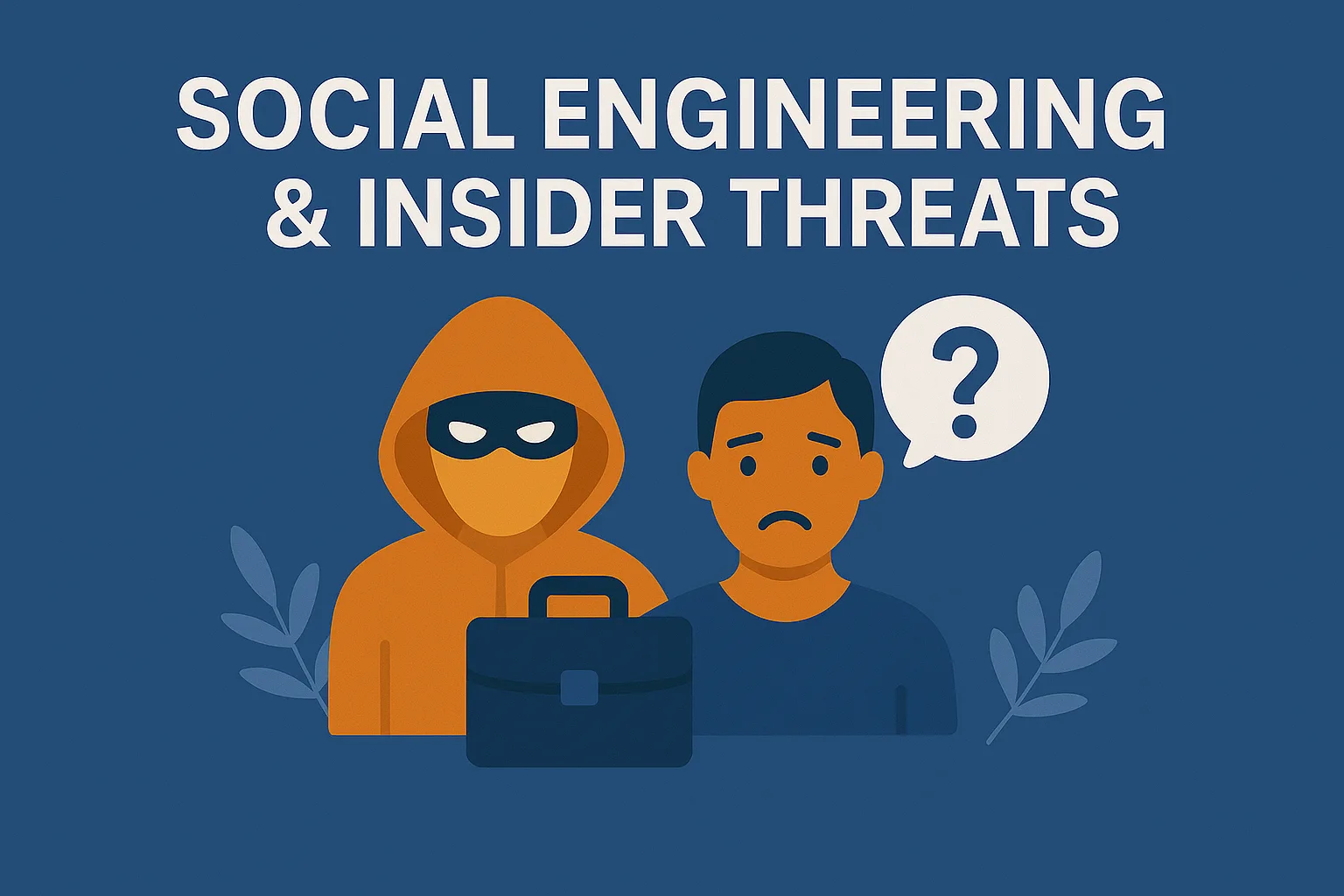
When People Are the Weakest Link: Defending Against Social Engineering & Insider Threats
We often think of cybersecurity threats as lines of malicious code, but some of the most effective attacks rely on something far simpler: people. Human error, manipulation, and misplaced trust can open the door to breaches just as easily as any virus.
Here’s what you and your team need to know to stay vigilant.
What Is Social Engineering?
Social engineering is a tactic where cybercriminals manipulate people into giving up information or access they shouldn’t.
Examples include:
- Someone pretending to be IT support and asking for your password.
- A “contractor” showing up with fake documents to gain physical access.
- Emails impersonating suppliers to send fake invoices.
The fix:
- Always verify the identity of anyone asking for sensitive info—especially if you didn’t request support.
- Never give out your password—IT staff can access accounts without needing it from you.
- Report suspicious activity, visitors, or messages to your IT or security team immediately.
The Insider Threat: Intentional & Accidental
Insider threats aren’t always malicious—often, they’re down to carelessness or poor training.
Unintentional risks include:
- Writing down passwords on sticky notes.
- Sharing credentials between team members.
- Falling for phishing emails due to lack of awareness.
Deliberate insider threats may involve:
- A disgruntled employee leaking data.
- Someone attempting to sabotage systems or expose sensitive information.
What you can do:
- Use individual, strong passwords for all logins.
- Educate your team on why sharing login details or leaving them visible is risky.
- Encourage reporting of unsafe behaviour in a constructive way.
Malicious Apps & Websites: A Click Away From Trouble
Malicious websites and apps can:
- Install spyware or ransomware.
- Steal banking credentials or logins.
- Use your device for cryptomining (cryptojacking).
- Display endless pop-up ads or hijack browser settings.
How to protect yourself:
- Only download apps from official app stores like Google Play or the Apple App Store.
- Check independent reviews before installing anything—even from official stores.
- Avoid shady websites—some malware can install itself through drive-by downloads, no clicking required.
- Keep software and OS fully updated with security patches.
- If in doubt, ask your IT team before downloading anything.
Want to improve your team’s cyber awareness? Explore our Cybersecurity Services or check out more tips on social engineering.
Final Thoughts
People-based attacks are some of the most dangerous because they exploit trust, not technology. The good news? They’re also some of the easiest to prevent—if you know what to look for.
At Novo IT, we help businesses of all sizes build strong human defences against social engineering, insider threats, and more. Get in touch if you’d like to tighten up your policies or train your team to spot the signs. 👋
Disclaimer: This article was created with the assistance of AI tools based on prompts and guidance provided by Novo IT Ltd.
Comments are closed